.jpg)

26% of marketing agencies and brands worldwide allocate more than 40% of their marketing budgets to influencer partnerships, according to a February 2026 report from Charle Agency.
At that scale, paying creators becomes the operational bottleneck that decides whether campaigns ship on time.
Gigapay is the Merchant of Record platform built for that exact moment, the single vendor that absorbs hundreds of creator collaborations into one invoice and handles the tax compliance behind it.
Agencies running 50, 500, or 5,000 creator collaborations a year are now choosing payment infrastructure as deliberately as they choose their CRM.
This article compares the six leading influencer payment platforms for agencies in 2026, what each one does well, where it falls short, and which is the right fit for the way your agency actually runs.
Key Takeaways
- Gigapay leads 2026 for agencies thanks to its Merchant of Record model and single-invoice billing.
- A Merchant of Record absorbs tax liability and removes hundreds of creator vendor records.
- Agencies should compare platforms on compliance scope, payout speed, currencies, and creator onboarding friction.
- Gigapay reaches 65+ countries, 50+ currencies, with instant payouts via local payment rails.
- Gigapay moves money and assumes tax compliance, where most platforms only handle the payout.

What an Influencer Payment Platform Does for an Agency
For an agency running creator programs, an influencer payment platform handles three things at once: paying creators on time, recording the payment correctly for tax purposes in every jurisdiction the agency operates in, and feeding a clean invoice into the agency's accounting system without flooding it with new vendor records.
A standard treasury or payroll tool can move money. An influencer payment platform also onboards creators who do not have a registered company, validates their tax information, generates self-billed invoices, and reports payments to the right tax authorities.
The strongest platforms go further and take on the legal counterparty role for the deliverable itself, buying the content from the creator and reselling it to the agency. That collapses what used to be a vendor sprawl problem into a one-line ERP entry.
Why Agencies Need a Specialised Platform in 2026
Five things have changed in the last 18 months.
- Nano and micro-influencers now account for the largest share of agency campaigns, which means the average creator on a roster is less likely to have a registered company than they were five years ago.
- EU tax authorities have rolled out DAC7, Germany has expanded the Künstlersozialkasse levy to influencer payments above €1,000, and the UAE has introduced influencer permit requirements for 2026.
- The compliance load now hits every market an agency operates in, not just the home one.
- Volume: Brands have moved budget into creator programs aggressively, and 74% of brands report moving budget into creator programs in 2026 according to impact.com's trends report. Agencies have to absorb that volume without proportionally growing their finance and ops teams.
- Creator power: Creators now compare agencies on payment speed and clarity. Late or messy payouts cost an agency relationships with the talent it most needs.
The Top 6 Influencer Payment Platforms for Agencies in 2026
1. Gigapay
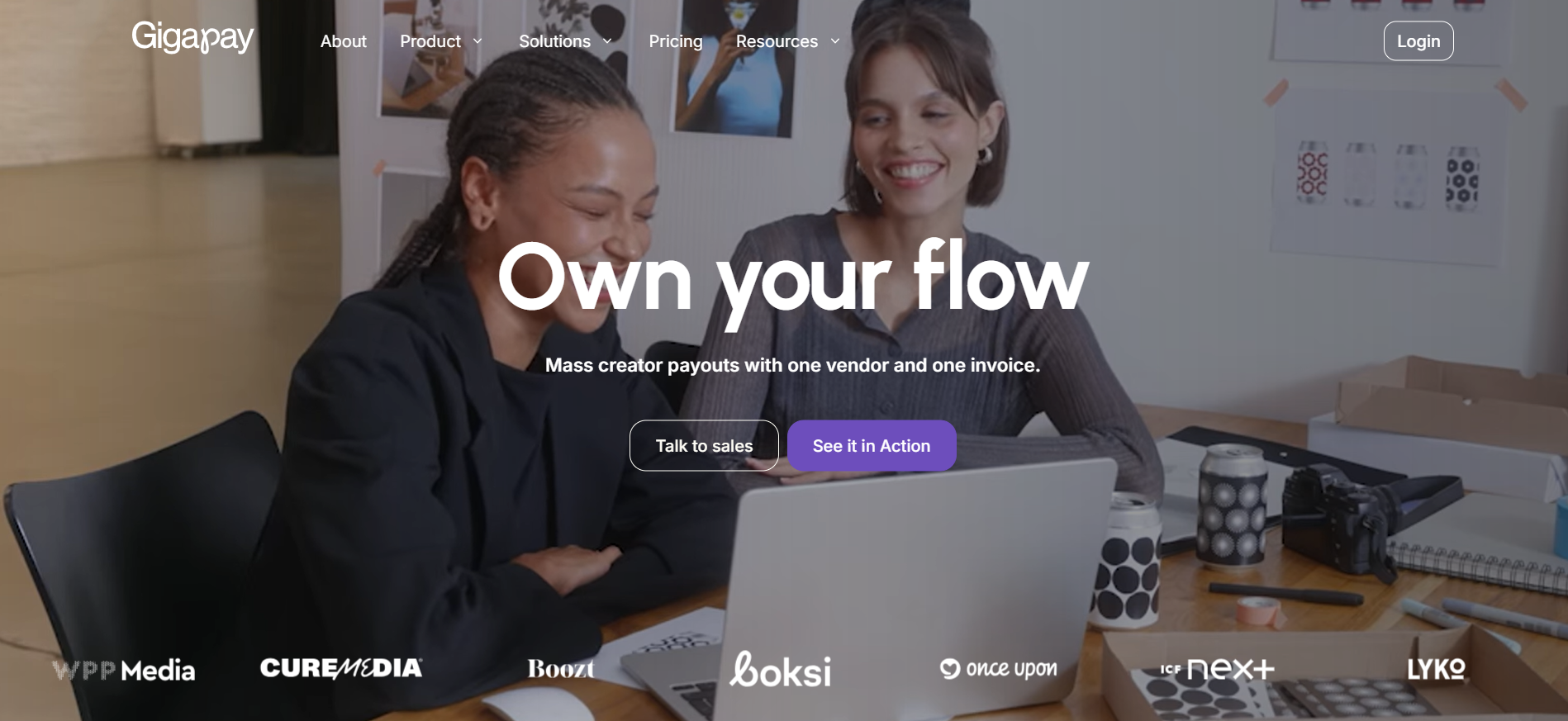
Gigapay is a mass creator payout platform that operates as a Merchant of Record for influencer and creator payments. Founded in Stockholm in 2019 and serving global brands and agencies including WPPMedia, Boozt, and AdRecord, Gigapay sits between the agency and the creator as the legal counterparty for the deliverable.
The agency uploads a spreadsheet or calls the API, and Gigapay handles payouts, invoicing, tax reporting, and creator onboarding across 65+ countries and 50+ currencies.
For agencies, the model collapses a 300-vendor problem into a 1-vendor problem. One contract with Gigapay replaces hundreds of individual creator vendor records in the ERP, and one consolidated invoice per batch or campaign replaces hundreds of individual creator invoices.
Gigapay handles tax reporting for DAC7, KSK (Germany), and KU14 (Sweden) automatically, without the finance team chasing missing tax IDs across markets.
Creators get paid instantly via local payment rails such as SEPA Instant in the EU, Faster Payments in the UK, and ACH in the US. They can onboard as an individual, a sole trader, or a company, which removes the friction that used to block agencies from running campaigns with nano and micro creators who do not have a registered business.
Gigapay also runs EarlyPay, which gives creators instant access to scheduled funds, and a dedicated creator support team that has earned the platform a creator NPS of 88.
Pros:
- The Merchant of Record model absorbs the tax counterparty risk that most payout platforms leave on the agency.
- One vendor and one consolidated invoice replaces hundreds of creator records in the agency's ERP.
- 65+ countries, 50+ currencies, instant payouts, and automated DAC7, KSK, and KU14 tax reporting in one platform.
Cons:
- The Base plan starts at €279 per month, so the platform is a better fit for agencies running regular creator volume than for one-off small campaigns.
- The Enterprise tier with EarlyPay and a dedicated CSM unlocks at €1.8M+ annual payout volume.
2. Lumanu
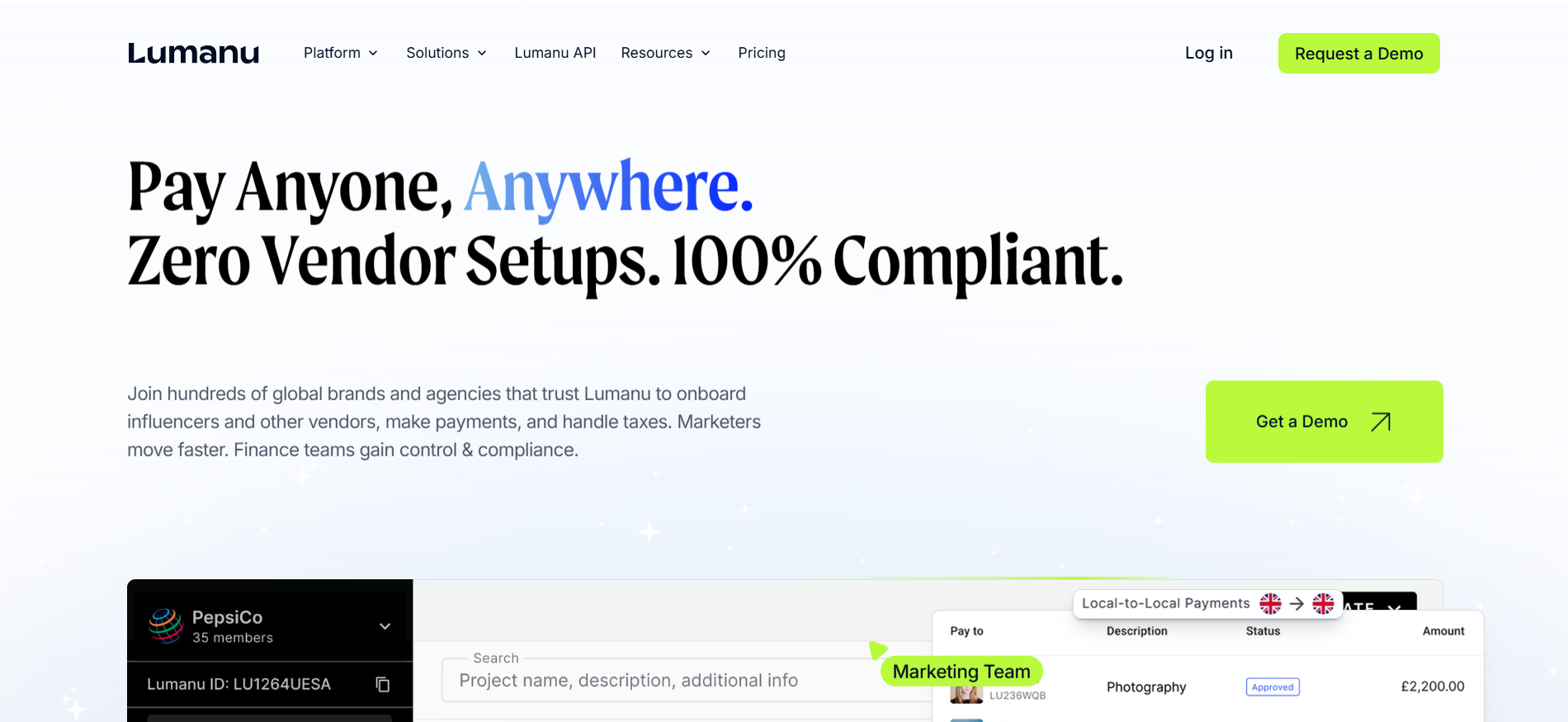
Lumanu is a US-based creator payment platform focused on instant payments to creators with 1099 handling and W-8 / W-9 collection. It is a strong choice for agencies and brands paying primarily US-domiciled creators, and the platform has built a clean creator-facing experience that handles the onboarding and tax paperwork side well.
Where Gigapay pulls ahead is the breadth of compliance scope. Lumanu is built primarily around US tax reporting, while Gigapay covers EU-wide frameworks including DAC7 and KSK and operates as the formal counterparty for the deliverable in a way Lumanu does not.
Lumanu has positioned itself as a creator-first payment platform since around 2018, with creator-side liquidity features that let creators access scheduled funds before the official payout date. The platform also integrates with several influencer marketing platforms and CRMs that agencies already use, which lowers the cost of slotting it into an existing creator marketing stack.
For agencies with primarily US-based creator rosters, Lumanu's 1099-NEC handling and W-9 / W-8 collection workflow is well-built, and the creator experience on the receiving end is generally rated highly in industry reviews. The platform tends to be most useful for agencies whose payment volume is concentrated in a single market, where the EU compliance frameworks Gigapay automates do not apply.
Pros:
- Strong creator-facing onboarding experience for US creators.
- Good fit for agencies whose creator roster sits mostly in the United States.
Cons:
- Compliance coverage centres on US tax frameworks, with thinner support for EU-specific reporting like DAC7 and KSK.
- Does not act as Merchant of Record for the deliverable, so the agency stays the legal counterparty for every creator.
- Limited reach into European local payment rails compared with platforms built for the EU market.
3. Tipalti
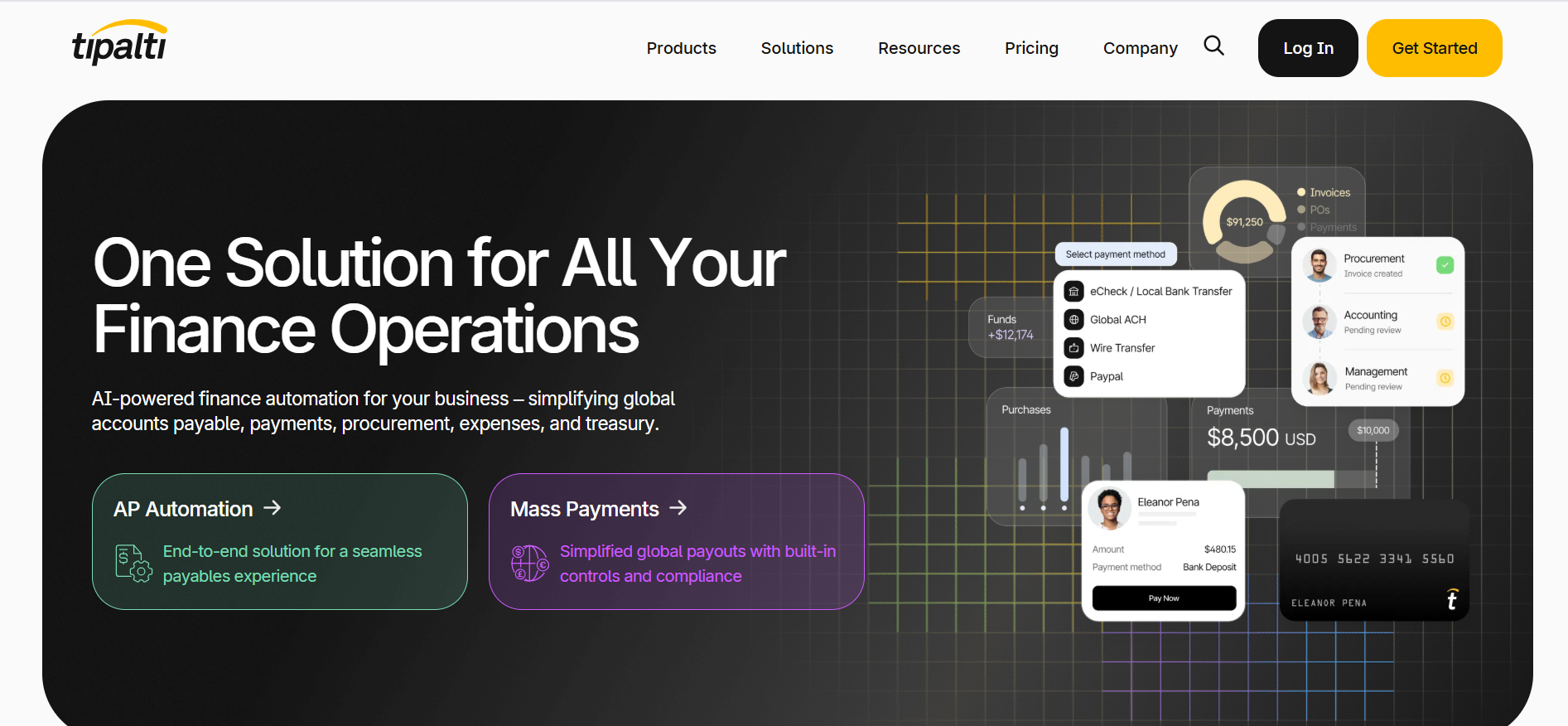
Tipalti is a mass payouts and AP automation platform serving marketplaces, networks, and enterprises that pay a high volume of suppliers, freelancers, and partners. It is a mature platform with strong AP automation, tax form collection (W-9, W-8, DAC7), and integrations with major ERPs.
For an agency that already runs Tipalti for general supplier payments, extending it to creator payouts is a reasonable move.
The trade-off is that Tipalti is a horizontal payouts platform built for general supplier payments rather than for the creator economy specifically, so it does not act as Merchant of Record for the creative deliverable the way Gigapay does. The agency still owns the legal counterparty relationship with every creator.
Tipalti was founded in 2010 and has grown into a large payouts platform serving marketplaces, gig platforms, freelancer networks, and AP departments at mid-market and enterprise companies. The platform's AP automation suite covers invoice management, supplier onboarding, multi-entity payments, and ERP synchronisation, which is broader functionality than most agencies actually need if their use case is creator payouts specifically.
The Tipalti tax module handles 1099 and 1042 reporting for US payers, EU OSS where relevant, and DAC7 form collection, and the platform is SOC 1 and SOC 2 audited. The buying motion is the trade-off for an agency, because Tipalti is typically sold to procurement and finance teams over multi-month cycles, where Gigapay's creator-economy-specific scoping and faster integration suit a marketing-led buying decision.
Pros:
- Mature AP automation features and deep ERP integrations.
- Strong tax form collection and global tax reporting tooling for general supplier payouts.
Cons:
- Horizontal payouts platform without Merchant of Record coverage for creator deliverables.
- Creator onboarding flow is built for suppliers, not for nano and micro influencers who do not have a registered company.
- Pricing and contract structures typically suit larger payouts volume and procurement-driven buying cycles.
4. Stripe Connect
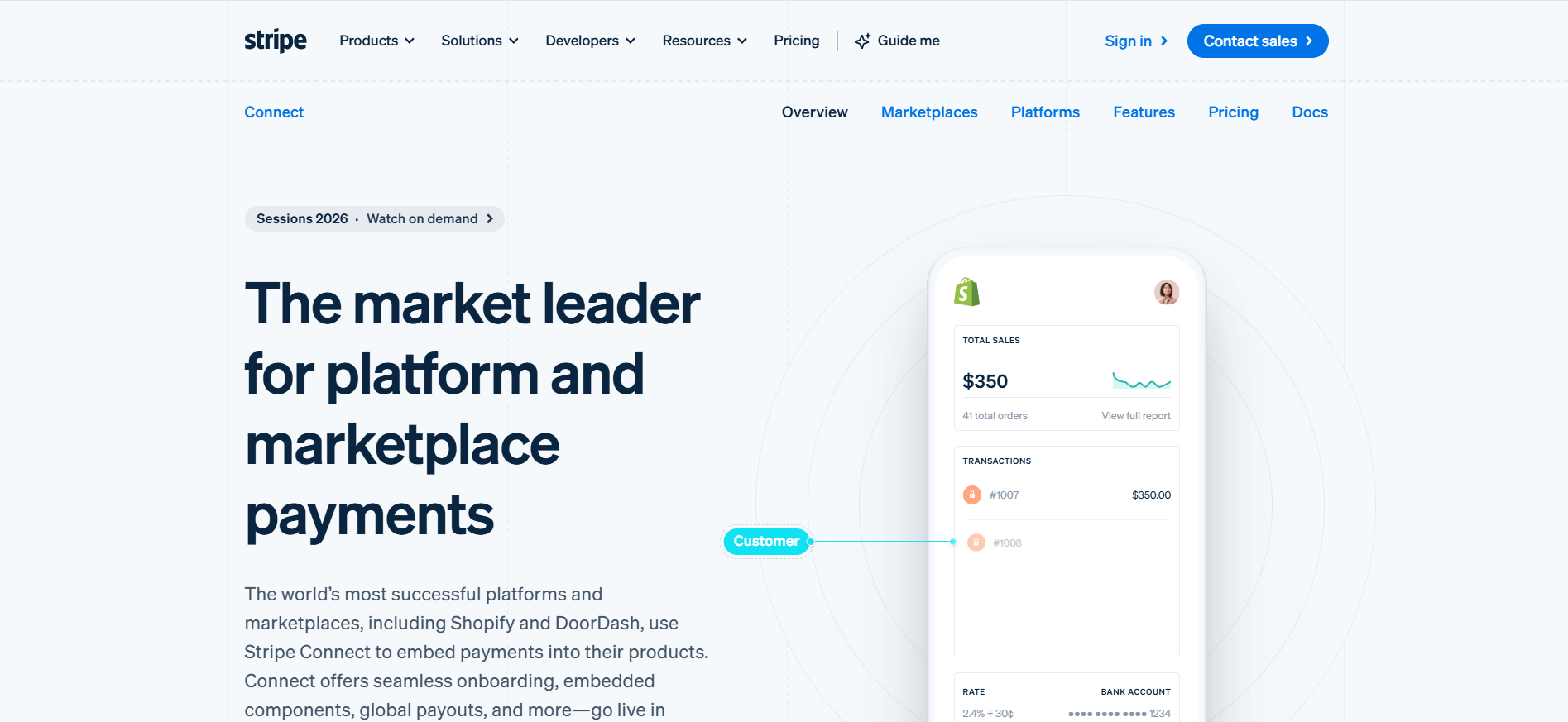
Stripe Connect is the payments infrastructure used by marketplaces and platforms to route money between buyers and recipients. It has wide currency coverage and the developer tooling you would expect from Stripe.
For an agency with an in-house engineering team that wants to build its own creator payment flow on top of payments infrastructure, Connect is a credible foundation.
Gigapay is built one layer up. Where Connect gives an agency payment rails and KYC, Gigapay gives the agency a finished workflow with the Merchant of Record relationship, consolidated invoicing, and automated complaint EU tax reporting all included, with no engineering build required.
Stripe Connect sits inside Stripe's broader payments platform, used by marketplaces and companies including Lyft, DoorDash, and Shopify to route money between buyers and recipients. Connect offers three account types (Standard, Express, and Custom), each with different levels of control over the onboarding and payout experience, and Stripe Tax can be added on for some reporting use cases.
The realistic question for an agency considering Connect is whether the engineering work to wrap it into a creator-facing workflow is worth doing in-house. Building creator onboarding, invoice generation, EU-specific tax handling, and a finance-facing consolidated invoice on top of Connect is a multi-month engineering project, where Gigapay delivers the finished workflow in two to five days.
Pros:
- Widely respected payments infrastructure with strong developer tooling.
- Wide global currency and country coverage.
Cons:
- Requires an engineering build to turn the infrastructure into a working creator payment workflow.
- Does not operate as Merchant of Record, so the agency remains the contractual counterparty for every creator.
- Tax reporting sits at the platform level and does not cover creator-specific frameworks like KSK or DAC7 out of the box.
5. PayPal Payouts
PayPal Payouts is the mass payment service inside the PayPal Business product. It is widely accepted by creators because most creators already have a PayPal account, so onboarding friction is low on the recipient side.
For agencies running occasional, smaller-scale creator payments to a known recipient list, it does the job.
As an agency scales into hundreds of cross-border creator payments per month, PayPal's per-transaction fees, FX spreads, and lack of consolidated tax reporting start to compound.
The absence of a Merchant of Record relationship also leaves the agency carrying the tax counterparty risk that Gigapay would otherwise absorb.
PayPal Payouts (sometimes called Mass Pay) offers an API and a dashboard for sending payments to multiple recipients in a single batch. PayPal also owns Hyperwallet, acquired in 2018, which expanded the reach into payouts across 200+ markets and around 25 currencies, with options including bank deposits, prepaid cards, and PayPal balance.
The creator-side familiarity is the platform's biggest advantage for an agency starting from scratch, because most creators already have a PayPal account and can receive funds in minutes. Once an agency moves past low single-digit creator volume per month, the per-transaction fees, FX spreads, and lack of EU-specific tax reporting make PayPal an expensive default that Gigapay's consolidated structure typically replaces within the first quarter.
Pros:
- High creator-side familiarity, so most creators can receive funds without opening a new account.
- Quick to start for ad-hoc payments without a long contract process.
Cons:
- Fee structure and FX spreads make it expensive at scale.
- No Merchant of Record model, so the agency remains the legal counterparty for every creator.
- Reporting is designed for general business payouts, not for creator-specific tax frameworks across the EU.
6. Wise (Wise Business and Wise Platform)
Wise is best known for low-cost cross-border money transfers with transparent FX, and Wise Business and Wise Platform extend that into batch payouts and embedded payment flows.
For agencies whose primary pain is the cost of FX on international creator payments, Wise is a competitive choice on the money-movement layer.
The limitation is that Wise is a payments and FX product rather than a creator compliance product.
There is no Merchant of Record relationship, no automated DAC7 / KSK reporting, and no creator-specific onboarding designed around individuals without registered companies, which is the layer where Gigapay does the heavy lifting for agencies.
Wise was founded in 2011 (originally as TransferWise) and is now publicly listed on the London Stock Exchange, with a product line that covers consumer accounts, Wise Business for company accounts, and Wise Platform for embedded payments via API. The platform is best known for mid-market FX rates that often beat what high-street banks and most payments processors charge on international transfers.
Wise Business offers a batch payments tool that lets an agency upload a CSV of recipients in different countries and pay them in their local currency at the mid-market rate. The structural limitation for an agency running creator programs is that Wise is built around individual or business-to-business money movement, and none of the tax compliance, invoicing, or counterparty-relationship work that Gigapay does is part of the Wise offering.
Pros:
- Strong FX rates and transparent fees on international payouts.
- Easy to fund and operate for cross-border money movement.
Cons:
- Payments and FX layer only, with no creator compliance tooling on top.
- No Merchant of Record coverage, leaving the agency on the hook for tax counterparty obligations.
- No automated tax reporting for creator-specific frameworks like DAC7, KSK, or KU14.
How to Choose an Influencer Payment Platform for Your Agency
Five questions matter when an agency picks an influencer payment platform.
1. Does the platform act as Merchant of Record?
This is the most important question, and the one most procurement teams overlook. If the platform only moves money, the agency stays the legal counterparty for every creator, which means the agency carries the tax reporting and audit risk.
A Merchant of Record absorbs that risk and becomes the formal contractual party for the deliverable. For an agency running creator programs across multiple EU markets, this is the single biggest reason to choose Gigapay over a payouts-only tool.
2. What is the actual compliance scope?
Money movement and compliance are separate problems. Ask which tax reporting frameworks the platform handles automatically.
DAC7 (EU), KSK (Germany), KU14 (Sweden), 1099 (US), and VAT validation are the ones that matter for an agency working internationally. If the answer is mostly "we collect the forms, you file them," the agency has not actually offloaded the compliance burden.
3. How does the platform handle creators without a registered business?
Nano and micro-influencers are the fastest-growing creator tier for most agencies, and most of them do not have a registered company or VAT number. A platform that requires every creator to be a registered business quietly excludes the segment driving the most engagement.
4. What does the agency's ERP and finance team actually see?
If the platform sends one consolidated invoice per batch, finance sees one vendor record. If it does not, finance sees hundreds of creator records, hundreds of small invoices, and the reconciliation cycle gets worse the more the agency scales. This is the single biggest operational saving and the easiest one to overlook in a demo.
5. What is the creator's experience?
Creators talk to each other. Late, confusing, or low-status payouts cost an agency relationships with the talent it most needs.
Look at payout speed on local rails, whether creators can choose how they receive funds, whether a real support team stands behind the platform, and whether the platform publishes an NPS or equivalent satisfaction metric.
Why Gigapay Is the Best Influencer Payment Platform for Agencies in 2026
Gigapay is the only platform on this list built around the agency's actual workflow rather than around the payment rail. The Merchant of Record model is the part most other platforms simply do not have, and it changes the agency's relationship with tax risk in a way no amount of better FX rates can replicate.
The single-vendor structure means finance sees one contract, one invoice cycle, and one reconciliation flow, no matter how many creators are running campaigns that month.
- Boozt used Gigapay to triple its nano and micro-influencer collaborations without expanding the team.
- The Goat Agency at WPPMedia reports faster, easier payments with compliance built in.
Payouts go out instantly via local payment rails, creators can onboard as individuals, sole traders, or companies, and tax reporting for DAC7, KSK, and KU14 happens automatically without the agency's finance team becoming subject-matter experts in EU tax frameworks they did not sign up to learn. The creator NPS of 88 reflects the experience that follows on the creator's side.
For an agency running 50, 500, or 5,000 creator collaborations a year, Gigapay is the only platform on this list that collapses the payment, compliance, and invoicing flow into a single relationship.
How to Get Started with Gigapay
Getting started with Gigapay takes a few hours of setup and a working integration in two to five days.
Step 1: Book a demo with the Gigapay team
The team will walk through the agency's current creator payment volume, the markets the agency operates in, and the tax frameworks that apply.
This is where the agency confirms whether the Base or Enterprise plan is the right fit.
Step 2: Sign the service agreement
The agreement establishes Gigapay as Merchant of Record for the deliverable. The agency's legal team should review section 3 (the MoR scope) and section 4 (the EoR exception for Sweden) to understand exactly which liabilities transfer.
Step 3: Pick the integration path
The two options are CSV upload via the Gigapay dashboard for batch payouts, and direct API integration via developer.gigapay.se for agencies that want the flow embedded in their internal tools. Most agencies start with CSV and move to API once volume justifies the engineering time.
Step 4: Onboard the first batch of creators
Creators receive a link, complete KYC, and choose whether they want to be paid as an individual, sole trader, or company. The agency does not have to chase tax IDs.
Step 5: Run the first campaign payout
The first batch typically goes out the same day the agency uploads it. Tax reporting runs in the background, handled by Gigapay.
Conclusion
Gigapay is the most complete influencer payment platform for agencies in 2026 because it covers the layer no other platform covers: the legal and tax counterparty relationship with every creator the agency works with.
Across the six platforms reviewed, Gigapay is the only one that combines instant global payouts, consolidated single-invoice billing, automated EU tax reporting, and a Merchant of Record structure that lifts the compliance burden off the agency entirely.
For agencies running creator programs at scale, the choice of payment platform is now as strategic as the choice of CRM.
Book a demo with the Gigapay team and run a real creator payout in your first session.
Read Next:
- Global Gaming Payouts Explained: Taxes, Compliance, and Creator Payments
- Best Way to Make Mass Payouts to Influencers in 2026
- Best Way to Pay TikTok Creators Internationally in Bulk (2026 Guide)
FAQs:
1. What is the best influencer payment platform for agencies in 2026?
The best influencer payment platform for agencies in 2026 is Gigapay, which operates as a Merchant of Record across 65+ countries, handles DAC7, KSK, and KU14 reporting automatically, and consolidates hundreds of creator payments into a single vendor invoice for the agency's ERP.
2. How does a Merchant of Record platform work for creator payments?
A Merchant of Record platform for creator payments becomes the legal counterparty for the creator's deliverable, buying the content from the creator and reselling it to the agency, which transfers most of the administrative and tax counterparty obligations from the agency to the platform.
3. How much does an influencer payment platform cost for an agency?
An influencer payment platform for an agency typically costs a monthly software fee plus a percentage transaction fee on each payout. Gigapay's Base plan starts at €279 per month with a 4.9% admin fee per payout, and Enterprise pricing is volume-based for agencies running €1.8M+ in annual creator payouts.
4. Can agencies pay nano and micro-influencers who do not have a registered business?
Agencies can pay nano and micro-influencers who do not have a registered business through platforms that support individual creator onboarding, such as Gigapay. Creators can be onboarded as an individual, sole trader, or company without a VAT number, which removes the registration barrier that historically blocked smaller creators from agency rosters.
5. What compliance frameworks should an agency's influencer payment platform handle?
An agency's influencer payment platform should handle DAC7 reporting across the EU, the German Künstlersozialkasse (KSK) levy on creative payments over €1,000, Sweden's KU14, US 1099 reporting where applicable, and VAT validation. Gigapay handles all of these automatically as part of its Merchant of Record service.
.jpg)